
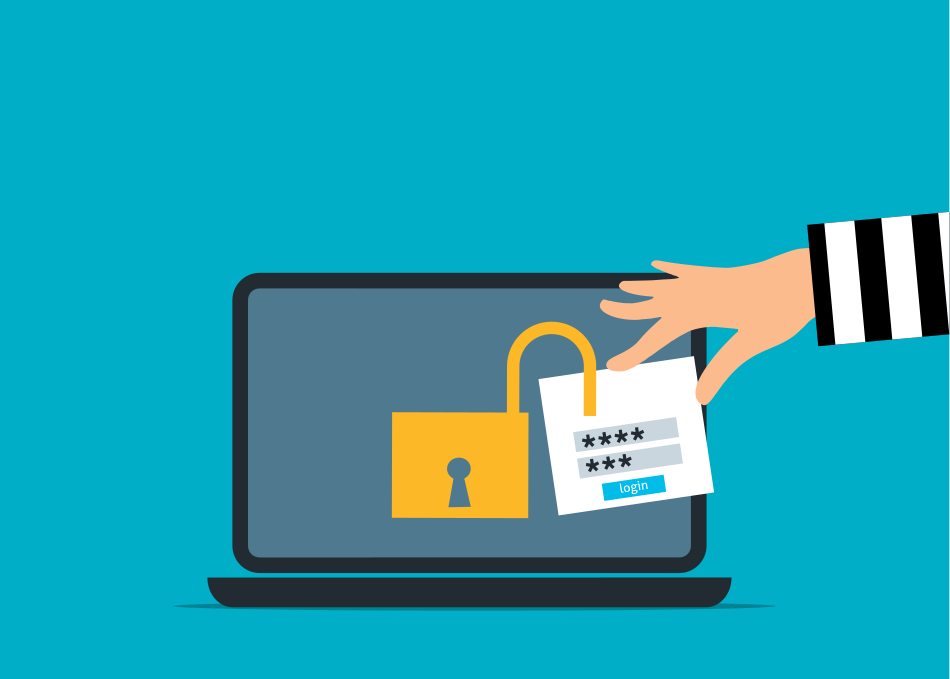
The “Session Cookie” Hijack: Why MFA Can’t Always Save You
IMAGE SOURCE: https://pixabay.com/vectors/attack-unsecured-laptop-hacker-6806140/
MFA is a strong front-door lock. But it’s not the only thing that decides whether someone can get in.
After you sign in, your browser keeps you logged in using a session token (often stored as a cookie). It’s the digital version of a wristband at an event: once you’ve been checked, the wristband proves you belong there. If someone else gets hold of that wristband, they may not need to go through security again.
That’s the core of session cookie hijacking. The attacker isn’t “cracking” MFA. They’re stepping around it by replaying your already authenticated session.
For many small and mid-sized businesses in Albuquerque and beyond, MFA can feel like the finish line, the point where security is “done”. In reality, it’s just one layer in a much longer chain of defence.
This isn’t a reason to stop using MFA. It’s a reason to stop treating it as the final layer of protection.
When sessions can be stolen, security shifts towards layered controls: phishing-resistant sign-ins, well-managed devices, tighter session policies, and early detection of suspicious access.
Why MFA Isn’t a “Game Over” Control
MFA is still one of the most effective security improvements a business can make. But it doesn’t stop an attack on its own because attackers don’t always try to break the login step.
They go around it.
Modern attacks are rarely a single technique. They are a chain. MFA might block the first step, but what happens after login is just as important.
This is where session cookie hijacking comes in.
Instead of trying to defeat authentication, attackers capture the session that is created after authentication and reuse it.
As Cloudflare notes, attackers are increasingly finding ways to circumvent MFA as part of broader, chained attack methods rather than isolated events.
What a Session Cookie Is and Why Attackers Want It
When you log into a system, it needs a way to remember that you’ve already proved who you are. That’s what a session does.
Without it, you would have to re-enter your password and MFA code every time you click something.
Session cookies store this logged-in state.
They are designed for convenience but that convenience creates risk.
If an attacker steals a session token, they are not guessing credentials or triggering MFA prompts. They are reusing an already authenticated session.
Kaspersky describes session hijacking (sometimes called cookie hijacking) as the theft of these session identifiers, which maintain a user’s authenticated state.
In simple terms: the attacker isn’t breaking in. They’re walking in using your existing access.
How Session Cookie Hijacking Actually Happens
Most people imagine account compromise as a password leak or a fake MFA request. Session hijacking is different.
The attacker’s goal is to steal the proof that you are already logged in.
1.) AiTM phishing
Adversary-in-the-middle (AiTM) phishing uses a fake login page that sits between the user and the real service.
Everything looks legitimate including MFA.
But behind the scenes, the attacker captures both the login details and the session cookie created after authentication.
This means the attacker doesn’t need to bypass MFA at all. They simply reuse the session afterwards.
Microsoft has highlighted how these campaigns intercept session cookies as part of the authentication flow.
2.) Browser-in-the-Middle session stealing
Browser-in-the-middle attacks take this further by actively inserting the attacker into the browsing session.
Once the session token is captured, the attacker can act as the user without needing to re-authenticate or trigger MFA again.
As Google’s threat intelligence notes, stealing a session token is effectively equivalent to stealing the authenticated session itself.
3.) Cookie theft from the endpoint
Not all attacks are sophisticated.
If a device is compromised through malware, weak security, or unpatched software, session cookies can be stolen directly from the browser.
Invicti notes that HTTP cookies can be extracted from endpoints and reused to gain unauthorised access.
At that point, the attacker doesn’t need to interact with the user at all.
MFA Is a Baseline, Not a Finish Line
MFA is essential. It significantly reduces the success rate of credential theft and should absolutely be in place across every business.
But session cookie hijacking highlights an important reality: attackers don’t always try to defeat login security. Sometimes they simply reuse what comes after it.
For businesses in Albuquerque, especially those growing their use of cloud tools and remote access, this is where gaps often appear, not at the login screen, but after it.
The practical response is not to replace MFA, but to strengthen everything around it:
- Make phishing harder to execute successfully
- Ensure devices accessing systems are properly managed and secured
- Tighten session controls for sensitive applications
- Monitor for unusual or risky access patterns
When these layers work together, MFA becomes what it should be: a strong foundation, supported by controls that protect what happens after login.
At Red Road Networks, we help businesses in Albuquerque and beyond build security that reflects how real-world attacks actually work not just how login screens are designed.
If you’re unsure whether your current setup protects the session itself, it may be worth reviewing it before attackers find the gaps for you. Our team can help review your systems and recommend the best approach for your business, book a free consultation [here].
Republished with permission from The Technology Press.